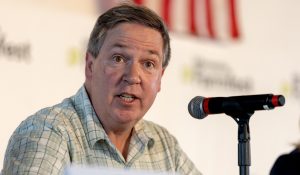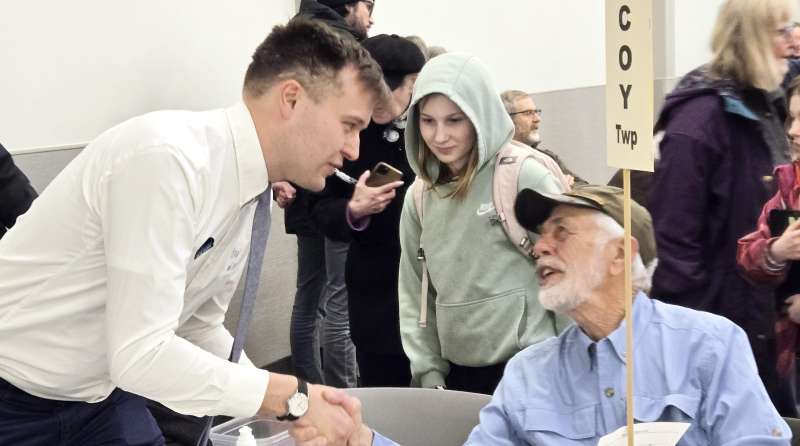
If Winona County is looking for a House candidate who treats affordability as a promise instead of a campaign buzzword, DFL-endorsed candidate for 26A Dan Wilson says he’s the best choice.
Wilson has been a cattle farmer for the past 10 years, and before that, he spent 10 years running a homeless shelter in the city of Winona. Now, he’s running for a Minnesota House seat to help ease the burden of increased housing, childcare, and healthcare costs for the district’s residents.
“Housing and childcare are the reasons why people move out of Winona, why people don’t move to Winona,” he said. “Doing what we can to create more of those things, but then also [encouraging] cheaper groceries, cheaper insurance, probably looks like championing the ideas that Democrats used to back in the ‘30s and ‘40s: Antitrust, breaking up monopolies, injecting more competition into the market, [and] making sure that large corporations are not price gouging us for their benefit.
Winona County has a housing shortage
Wilson says Winona County has a clear housing crisis. Research has shown the county needs at least 1,400 more housing units, 800 of them in the city, within the next five years. It’s a need he’s deeply familiar with, as chair of the Hope for Homes, an “insanely bipartisan group of people from the Sierra Club of Minnesota to Americans for Prosperity, a group that’s probably going to take attack ads against me,” whose mission is to expand supportive housing options in the county.
The work the group is doing has made it clear, Wilson said, that it needs to be easier for neighborhood builders to construct properties and meet this need. “There’s a handful of builders who only build in Winona contracts. They’re doing the building themselves, they’re managing rentals themselves. We don’t want them to hire a lawyer in order to build a duplex,” Wilson said. He believes this could be resolved by giving local contractors a list of options of homes that can be built, and letting them decide what they will take on.
Seniors in Winona County are also lacking housing. Wilson says the county is short 100 units of affordable senior housing, “so if you’re living on a fixed income and you hurt your back, or you realize that you don’t want to walk up and down the stairs anymore, there’s literally nowhere for you to go in the county.”
Part of Wilson’s promise to residents if he gets elected is to use the state bonding bill to build these missing units. He said this has a two-for-one impact, because then the housing those seniors are currently in can be opened up for young families and first-time homebuyers.
An appetite for universal childcare
Another core priority for Wilson is childcare, because it too is desperately needed in Winona County. He said the county is missing 500 childcare slots, something he’s heard from voters, and seen for himself. “I was a stay-at-home dad for the first year and a half of my daughter’s life, and I called 50 different daycare centers before I got one that said yes,” he explained.
His fix is to move toward universal childcare in the long run. Ultimately though, Wilson wants to integrate school systems with fully-funded childcare centers to create more units immediately, and help declining school enrollments. Wilson said this is important because, while parents can’t afford to pay more for their childcare, providers also can’t afford to charge less.
Wilson also believes that loosening regulations for in-home daycare providers can also help provide immediate relief over the next few years while longer-term solutions are planned out. “If we do this, our state economy will grow and we’ll give a leg up to multiple generations of Minnesotans,” Wilson noted.
Consolidation is pricing people out of living
When it comes to other unaffordable necessities, like groceries and health insurance, Wilson said price fixing and consolidation are the main culprits. He blamed large corporate grocers and distributors for collaborating together to raise prices, and noted that hospital consolidation has been associated with lower quality of care for patients, while health insurance premiums have simultaneously increased.
These problems aren’t unique to Minnesota, but they are having a major impact on the state’s residents. Wilson said he would push to pass antitrust legislation to address the mass consolidations and force state solutions, since the federal government won’t address it.
For grocers, he points to state Rep. Emma Greenman’s bill–which was laid over in the 2026 legislative session–which would create fair markets for independent grocers. For hospital consolidation, Wilson said a different approach is needed: a “Minnesota public care option that is truly run by the state, that takes insurance companies out of the picture, giving the state an opportunity to offer competitive products.”
Focusing on the actual issues
When it comes down to it, Wilson said he wants to put a spotlight on the actual day-to-day issues his district’s residents are facing. He criticizes his opponent, incumbent Republican Aaron Repinski, for the “issues” he’s campaigning on.
For his part, Repinski has said he wants to “make Winona County and all of Minnesota a better place to live,” and is prioritizing education and cutting fraudulent spending in his campaign. But Wilson sees it differently and says he questions Repinski’s claim that he’s “not like MAGA Republicans, as Wilson summarized his opponent’s attempt to appeal to a wider swath of the district’s voters.
“We’ve seen during the last session he’s come out in support of a five-week abortion ban. He’s called the school meal program absolutely wrong. He voted to end the session early with some of the most extreme members of the House. And he’s really come out strong against boys and girls sports,” Wilson said.
Wilson is referring to the fact that Minnesota law protects trans kids when it comes to deciding whether or not they should play in sports leagues that match their gender identity. Many Republicans are against this, and the federal government sued Minnesota over the state’s policy in March. Minnesota has remained steadfast in its choice to protect trans youth in sports, but Republicans have made it a sticking point.
Wilson said it’s clear to him that the “one, maybe two trans athletes in the state” are not an “issue” candidates should be focused on—especially when there’s “close to 200,000 people that are going to get kicked off Medicare and Medicaid.” Republicans like Repinski, he said, “are talking about this because they don’t have a plan for housing. They don’t have a plan for childcare. And they think they can get a couple extra votes by punching down on high school students.”
For Winona County, Wilson says he wants to increase visibility of the Democratic Party in his chunk of Greater Minnesota. “I want to try to revive this farm-labor vision or rural solidarity with urban labor unions, like both farmers and labor unions,” he said. “Recognizing that we have the same common economic enemy, which is corporate greed. And how do we work in solidarity on that together?”
The broader pitch Wilson says he wants voters to hear and understand is simple: He wants to put Winona County and its issues first and not “hype up culture war BS.” “There is a priority of, if I flip this seat, House leadership is going to want to keep me in this seat. Which means I can ask for big things. I’m trying to create politics of how we can tangibly make people’s lives better.”