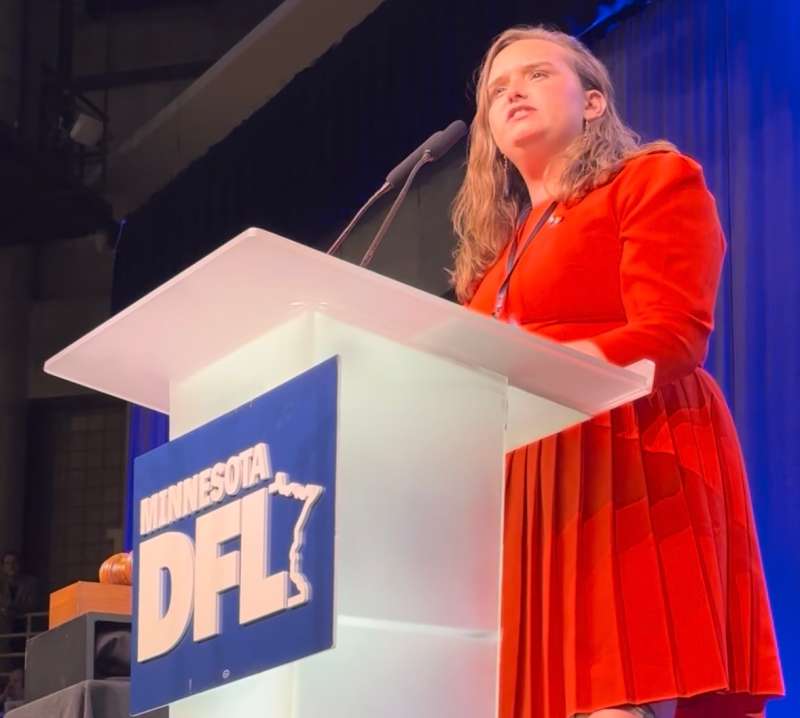
As a former Republican and as a transgender woman, Minnesota gubernatorial candidate Kobey Layne is not your typical progressive politician—but she sees that difference as one of her campaign’s biggest strengths.
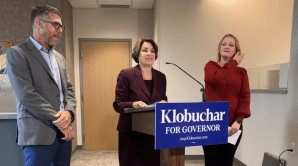
Running against Senator Amy Klobuchar, the DFL-endorsed candidate for the position, Layne was nominated at the DFL Party Convention in May and gave a rousing nomination speech to rival Klobuchar’s. While Layne did not get the party’s endorsement, she says she will still run in the primaries, campaigning on affordability, accountability, and protecting immigrants, LGBTQ+ people, and other marginalized communities.
What makes Kobey unique
Layne grew up in Walker, Minnesota, which she describes as a “small conservative town…more on the libertarian, fiscally conservative side.” She was interested in volunteering and local community action from a young age. . In high school, she started a petition for an injunction to stop her hometown from taking on a water maintenance project that would cut off access to local businesses.
At the time, she thought state and federal government action wasn’t the way to make change happen, but her worldview shifted after she got to college. “I learned what a racial covenant was, what redlining is, what a political ideology is, and how it influences the way in which you see the world.” She says this “slow unpacking through time” made her realize her beliefs did not align with the Republican Party she grew up immersed in.
Later, during graduate school, Layne’s “gender journey” started. “It took a lot of soul-searching, like a lot of soul-searching..where I’m like, I have to live with myself for the rest of my life. So who is the person in my body that I want to be for me, not everyone else?” Layne says the answer to that question led her toward becoming the woman she is today.
Layne acknowledges that “there are some people who will not listen to what I have to say just by virtue of my trans identity,” but adds that whether people take issue with her identity or not, “we do things that put money in your pocket,” pointing to the queer community’s contributions to society at large that benefit everyone.
Whether she wins or loses, Layne says her joining the race in the first place sends a powerful message. Rep. Leigh Finke (D-St. Paul) is the first openly transgender woman in Minnesota’s legislature, Rep. Liish Kozlowski (D-Duluth) is one of the state’s first nonbinary legislators, and as of now, there has never been a transgender US governor. Layne says, “This is about the symbolism that we leave, not only for LGBTQ+ people, but for young people, that if a 26-year-old transgender woman can be the first trans person nominated for a statewide office in our state’s history, for LGBTQ+ people and young people, you can meet your neighbors. You can run for House. You can run for your school board.”
Accountability to Minnesotans
Layne told Courier Minnesota that she has a 100-day plan for Minnesotans that, if elected, would keep her accountable in office. She said she’ll be coming out with the plan soon. “I’m not here to have empty promises about what the governor can do. I have that all prescribed in a plan…and it’s intentionally designed so that people can check my work…People should be able to see their governor, meet their governor. It shouldn’t be from this ivory tower that people govern from,” Layne says.
Accountability for the federal government and the role it plays in Minnesota is also top of mind for the candidate. When it comes to the aftermath of Operation Metro Surge (OMS) and the federal government, Layne says she wants to push through unfinished legislation that holds ICE to legal standards, such as the ban on masks for federal agents, which failed in the deadlocked House this year. She criticizes Governor Tim Walz for having the National Guard give out hot chocolate to protesters, when “we should have been using our State Guard and our State Patrol to be constitutional observers.”
Layne also mentioned the 15 Minnesotans indicted last week for allegedly “impeding or injuring federal officers” during OMS and accused the federal government of attempting to make an example by arresting those opposed to this administration’s policies. “The role of civil disobedience is very American, whether we look at the Civil Rights Movement, whether we look at the Boston Tea Party from over 200 years ago. I think that standing up and making sure our government knows that what they’re doing is not okay is at the forefront of this.”
Targeting trickle-down economics
Layne took swings at all of her opponents when discussing affordability. She says Republicans “see the mechanism to help people as pouring into infrastructure,” but that this fails because trickle-down economics “doesn’t actually make its way to the bottom.”
In the case of Klobuchar, Layne’s DFL opponent who just released her policy proposals for more affordable homes in Minnesota, Layne accused the senator of believing in a “business framework” similar to what Republican lawmakers typically back. “A lot of her [Klobuchar’s] plan is building more housing, and who benefits from proposals like that? It’s probably gonna be business developers…housing developers.”
Layne says she is more aligned with the “other camp of the Democratic Party”—like Sen. Bernie Sanders—which believes politics shouldn’t be a left versus right issue, but instead a matter of top versus bottom. “It’s really about the power that corporations and billionaires have over not only our lives, but our politics, our government, that ordinary people don’t have,” Layne says.
In interest of lowering costs, Layne says she’ll also prioritize affordable childcare, channeling resources for those with disabilities, capping rent at a 3% annual increase, and investing in green energy.
Standing up for all
Civil rights are by law designed to protect everyone in the United States, citizen or not. Layne says she sees white candidates asking those that are Indigenous, LGBTQ+, and immigrants for their support, yet don’t give it back. “This is about making sure that we mean to help everybody, not just a cherry-picked coalition.” She says she would rather lose the primary election supporting every one of these groups, than go without some “just to get the win.”
Layne solidifies herself as a working class candidate, “not someone who comes from wealth” or has political connections. She hopes that voters will relate to this background and see an advocate for them with the policies she is pushing for. “For me, this is about making sure that we’re tilting our system back in favor of working class Minnesotans in this state. I think that our government should serve us, be accountable to us, and should make our lives more affordable. If that resonates with people, this campaign is for them.”