President Trump has made it very clear how he feels about Somalis. In recent months, he’s called all Somalis immigrants “crooks” and proclaimed that he “doesn’t want them in our country.”
When it comes to Minnesota Somalis, he hasn’t minced words either, reposting a video that criticized Somali kindergarten students for wearing hijabs, and calling Somali-native US Rep. Ilhan Omar (CD-5) “garbage” while his supporters chanted “send her back.”
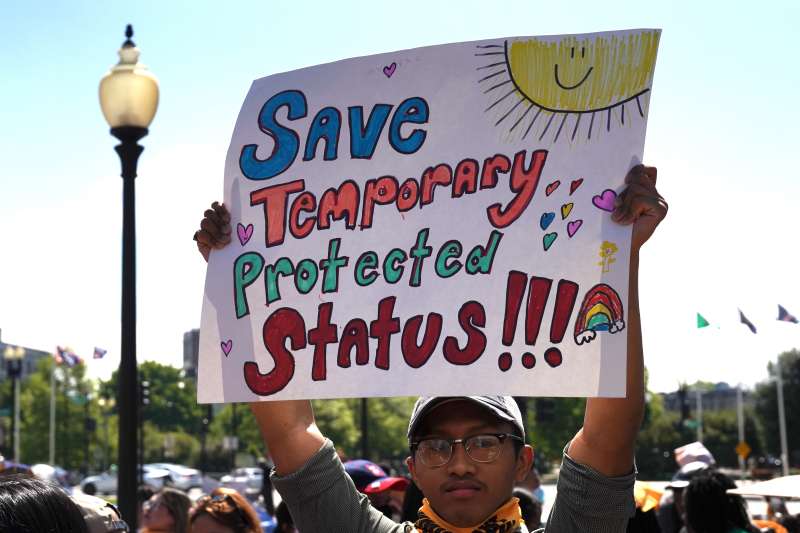
The state is home to the largest population of Somalis in the US and the consistent attacks from the White House have tested the community’s resilience—particularly as his administration has threatened to revoke Somalis’ Temporary Protected Status (TPS).
Trump targeting TPS
The president announced in November 2025 that he was terminating the TPS “immediately” for Minnesota Somalis. “Somali gangs are terrorizing the people of that great State, and BILLIONS of Dollars are missing. Send them back to where they came from. IT’S OVER!” Trump wrote on Truth Social.
TPS means that the US government grants impermanent residency to immigrants who can’t safely return to their home country. It protects people from deportation and allows them to legally work in the country.
But TPS protections have been a frequent target for the Trump administration, which has already revoked the status for nationals from Syria and Haiti, Yemen, and Venezuela. Of the countries that remain on the TPS list, former Secretary of Homeland Security Kristi Noem also previously claimed that Burma (Myanmar), Ethiopia, Somalia, and South Sudan no longer meet the requirements for the status.
While federal orders to revoke TPS from these countries have been stopped in court decisions, the administration has said it “vehemently disagrees” and isn’t giving up.
‘No choice but to stand up’
Despite these attacks, Minnesota’s Somalis aren’t giving up either. In the words of Suleiman Adan, the deputy executive director of Minnesota’s Council on American-Islamic Relations (CAIR-MN), Somalis “have no other choice but to stand up” in the face of the threats.
Contrary to the accusations of Trump and others, Somalis are also vital to Minnesota’s economy. Concordia University economist Bruce Corrie used census data and a widely used economic modeling tool to estimate that Somalis generate over $500 million in household income, pay $67 million in taxes, and bring $8 billion to the state’s economy each year.
Adan noted that “the villainization of Black bodies” is something Americans have seen time and time again across the nation’s history, and Somalis are just the current target.
He is steadfast in defending Somalis’ status, pointing out that conditions in war-torn Somalia haven’t changed, which makes him question Trump and his administration’s motive in their ongoing push to revoke TPS for Somalis. “We believe that if the conditions haven’t improved in these 30 years, ending it and sending away the residents of Minnesota that have been law-abiding, part of making Minnesota great, is quite alarming.”
Most Somalis are Muslim, which Adan said means that they are “channeled by the values of our faith.” Many Republicans villainize Muslims for political gain–like Trump–and have been using the large number of Somali suspects in the state Feeding Our Future fraud investigation to justify Trump’s vitriol.
US Rep. Tom Emmer (CD-6) said it outright last month: “Minnesotans are so afraid you’re gonna call us a racist, you’re gonna call us an Islamophobe. You know what? I’m done being even the least bit careful. Somalis don’t assimilate. And if they don’t assimilate, then they should go the hell back to where they came from.”
Despite this rhetoric, Minnesota has taken in Somalis with open arms, specifically when Operation Metro Surge began in December 2025 at the same time the president ramped up his criticism of the community. Adan said Somalis did their part to help their Minnesota neighbors while under attack. He said Muslim scripture specifically rules that “you stand up and speak up when you are a witness to injustice.”
Seeking lasting change
The community has kept that spirit going. Then-mayors of Minneapolis and St. Paul spoke with other state leaders to defend the Somali community at the beginning of OMS. Rural Minnesotans directly called out Trump’s comments by standing together in an interfaith movement to stop ICE’s attacks. And many nonprofit groups got to work condemning Trump and pushing for the targeted raids to end.
But community support and mutual aid can only go so far. What Somali Minnesotans need now, Adan said, is ongoing relief from Operation Metro Surge and the federal government.
He mentioned the Nonprofit Security Grant Program as one option, but not as the initiative is structured right now. The program provides funding to protect nonprofit organizations–which were the backbone of mutual aid efforts during OMS–from attacks, but requires ICE agents to be let into the state if funding is accepted. Adan said if this language could be repealed, this would be a solid option to get retribution for the state.
And while average Minnesotans and state lawmakers can’t directly prevent the Trump administration from continuing to push to revoke TPS status for Somalis, they can vote for people who can.
There is fear among some immigrant communities that they won’t be able to vote—whether it be in next week’s primary election or the general election on Nov. 3. Whether it’s the threat of ICE officers at polling places or efforts to bring an end to mail-in voting, the federal government has demonstrated its willingness to interfere with upcoming elections, regardless of voters’ citizenship status.
Adan said the best thing people can do now–particularly if they are an immigrant–is to get educated about their rights. Multiple organizations across Minnesota—like MONARCA and the Immigrant Law Center of Minnesota—-hold regular know-your-rights training sessions to help empower immigrants and allies. “If you’re able to vote, show up and vote..knowing that you are voting and being able to engage in the election process, that itself says something,” Adan said.
To learn more before the midterm elections, check out the biggest Minnesota races to follow, learn how to vote, and familiarize yourself with what’s on the ballot this year.