After President Donald Trump signed into law a resolution that overturned a 20-year ban on mining in the Superior National Forest in Minnesota last month, the bill’s author, US Rep. Pete Stauber (R-Minnesota), and mining advocates called it a victory that would bring jobs to the Iron Range and help the domestic mining industry. The truth is more complicated.
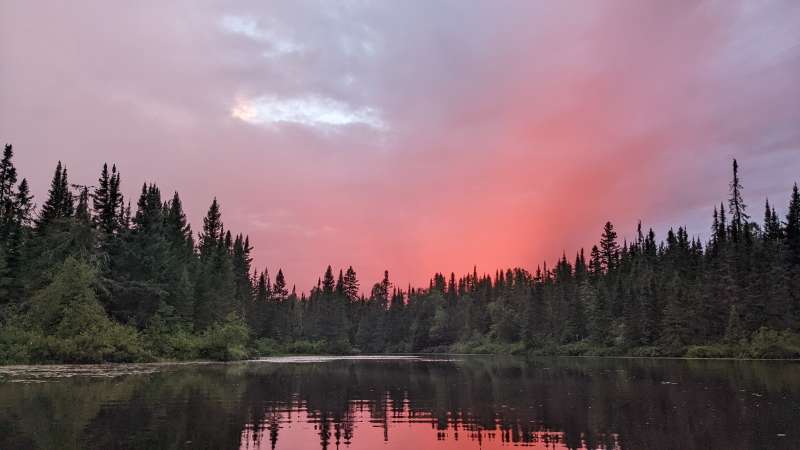
The area impacted by the reversal of the ban includes the watershed for the Boundary Waters Canoe Area Wilderness (BWCA), which constitutes over 1.1 million acres of federally designated wilderness. The area is known for its pristine drinking water, hiking, fishing, hunting, camping, and canoeing opportunities, and it’s a habitat for local wildlife like deer, moose, wolves, and loons.
Conservation groups, Indigenous groups, US Senators Tina Smith and Amy Klobuchar (D-Minnesota), and Minnesotans of varying political backgrounds fear the move will cause significant pollution impacting the land, the water, and the local wildlife that rely on it.
The project has also drawn scrutiny because the company behind it paid ex-Trump officials hundreds of thousands of dollars while the proposal was being considered, and its parent company has a well-documented history of pollution in past projects.
Opponents of the mining effort are pushing back, and there are many barriers before the project can come to fruition, including environmental and political action that could halt it completely.
The environmental cost
Ingrid Lyons is the executive director of Save the Boundary Waters, the state’s largest conservation organization, which is working to permanently protect the BWCA from mining. Lyons says the environmental impacts of the move carry both short- and long-term risks for the BWCA watershed.
First, the underground mine has to be built. The construction and test drilling that follows would bring both noise and light pollution to the BWCA, which is a “dark sky sanctuary,” meaning that it needs to continue to meet strict requirements—such as almost no artificial light being allowed—to maintain that designation.
In the longer term, Lyons says there are serious concerns about water pollution. When sulfide ore is exposed to water or air in a mining operation like this, it turns into sulfuric acid. Lyons says leaching—where toxic heavy metals and sulfuric acid find their way to groundwater—is “inherent to the industry” and that the operation’s effect on local waterways could violate the Clean Water Act.
Sulfuric acid is extremely corrosive, eating through plants, burning wildlife and people, and it even changes the pH of the water. Sulfates—salts derived from sulfuric acid—can also get in our lungs, damaging our airways.
High levels of sulfate also kill wild rice, Minnesota’s state grain and a food source for wildlife. Lyons says the surge in sulfates would also increase methylmercury levels, bioaccumulating in fish tissue and potentially making them toxic to consume.
“The water that flows, the air that blows, the sound and light that travel” don’t respect the lines drawn to keep a wilderness area protected, Lyons noted.
Minnesota’s mining legacy
Minnesota has a vast history of mining, most importantly the mining of iron ore. It was discovered around the turn of the 20th century at three different iron ranges in the northeastern part of the state and Minnesota is home to the largest deposits of iron ore in the US.
Once the supply of quality iron began to dissipate in the early 1990s, miners made the switch to taconite—a low-grade iron ore. While this kept Minnesota’s mining industry alive, companies were dumping the waste rock into Lake Superior. Environmental studies found that the dumping was negatively impacting the health of wildlife and nearby communities and resulted in a federal lawsuit, ultimately giving the Environmental Protection Agency broader power to regulate pollution by corporations.
But, in Minnesota there’s no historical precedent for the looming sulfide-ore copper mining project in the BWCA watershed.
Sulfide-ore copper mining requires blasting through large amounts of waste rock—i.e. rock with no value—to get to the precious metals and minerals. Less than 1% of the rock contains the resources that are desired by miners, so it has to be stored or dumped somewhere.
The state’s history of taconite mining, Lyons says, offers an indication of the pollution that copper mining would bring to the region. She explains that a “small incidental pile” of waste rock from just one case of taconite mining caused “a 150% increase in sulfate levels crossing into the wilderness over 20 miles away.”
Copper mining in the area, Lyons argues, would have an even larger effect, since it will produce so much waste rock and because the project is located even closer to the BWCA.
When left around the mining site, waste rock can leave metal concentrations in stream sediments, which get carried through water used in drinking water for people and wildlife, and irrigation systems used in our food.
Who’s behind the mining project?
The company that wants to mine in the watershed is Twin Metals Minnesota. The company, a subsidiary of Chilean mining powerhouse Antofagasta PLC, paid former Trump officials $380,000 as its proposal was being considered. Antofagasta has a well-documented history of pollution in past projects.
Twin Metals claims the project will create more than 750 long-term jobs, and another 1,500 non-mining jobs in the community. The non-mining jobs mostly consist of construction work, which are only temporary.
This job growth appears to be far less than the employment associated with keeping the mining ban in place. A 2018 Harvard study cited by critics of the project suggested that the 20-year mining ban previously in place would create up to 4,500 more jobs in the wilderness area and $900 million more in wages than the proposed Twin Metals mine. These jobs are mainly in the travel and tourism sector, such as lodging, camping and outdoor recreation equipment, as well as local businesses who profit from BWCA visitors.
Twin Metals says the jobs they’re creating will create “several million labor hours” with careers for electricians, carpenters, geologists, and even environmental engineers. It says now is the time to act as the demand for copper and nickel grow exponentially. The company did not respond to a request for comment.
Minnesota’s loss, China’s gain?
As for what Twin Metals is specifically after in this project, Aaron Brown says the company is looking for copper, nickel, and rare earth metals. Brown is a long-time Iron Range reporter who now heads Minnesota Brown, a one-man news site focused on life and politics in the Iron Range. Deeply entwined with the local community, Brown has followed the BWCA mining debate since 2001.
Copper and nickel are both used in electrical infrastructure. Brown says the rare earth minerals are more popular for emerging technology like smartphones and LED lights, but “they’re located in much smaller quantities,” leading to the “overburden of waste rock” to get to them.
After mining these minerals, they must be smelted down to extract the metals from the ore. Twin Metals has not said where it will send the ore to be smelted, but the likely answer is China.
Republicans want to keep mining domestic for “national security,” as more than half of America’s minerals come from other countries. But only two copper smelting facilities exist in the US, compared to over 47 in China. If the mined ore does go to China to be smelted, Brown says we need to question, “Are we just going to be buying back our minerals from China, with China reaping the profits?”
What happens now?
Though the ban is lifted, the project still has several hurdles to overcome before it can begin—and it’s far from a done deal.
Minnesota’s mining permit process is a rigorous, multi-year pathway that comes with an environmental review, permitting for air quality, water quality, solid waste, hazardous waste storage and transportation, above- and below-ground storage tanks, and other certifications. There’s also federal and private land permits Twin Metals will have to obtain, all before they can even begin to build the mine, which will take another few years.
With the environmental review comes a public comment period, when local Minnesotans can make any concerns known. All told, Brown believes the project could be a bare minimum of at least two years away, even if Twin Metals’ permitting process goes perfectly.
“But,” he says, “I’d be shocked if it isn’t five years, or even 10.”
The political opposition
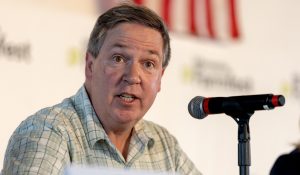
US Sen. Tina Smith led the Senate effort to vote no on lifting the mining ban, and even got two Republicans—Maine’s Susan Collins and North Carolina’s Thom Tillis—to join Democrats to join in their opposition, but the bill still passed 50-49.
Smith is retiring, but she is still pushing for a federal ban on mining in and around the BWCA, and is encouraging Minnesotans to get involved. She has proposed legislation to specifically ban new sulfide-ore mining in the area, while a moratorium put in place by the Biden administration had banned all general mining and geothermal development.
“That would be a tough bill to pass,” Smith said, “but I hope Minnesotans reach out to their legislators, regardless of what side of the aisle they’re on, and let them know that they want to see the bill passed.”
Tribal nations in particular can play a powerful role in speaking out right now, Smith added. The mining site is on Chippewa territory and while Minnesota’s Tribal nations were extensively consulted in the moratorium at the federal level in 2023, Smith says their input was largely bypassed by the Trump administration this year. Multiple Indigenous groups have condemned the ban reversal. Smith is calling on Minnesotans to continue to stay informed on the issue and to get involved with groups like Save the Boundary Waters to help effect change.
“Know that your voice is powerful. Your voice is what made the moratorium happen a few years ago, and it will be really important as we go through this next lengthy process,” Smith said.