When Christiane Webster and her husband moved to their mobile home park in Burnsville in 1997, they began paying both their mobile home mortgage and rent for the land it sat on. Owned by a mom-and-pop outfit, the park typically raised land rental prices by a max of $25-$35 per month every few years. That was until last year, when a corporation bought the park.
“They raised our rent $67 and they doubled our garbage overnight, put water meters on our house, and also started charging us for sewer, which had been in the lease,” Webster said. In total, their fees plus the rent increase added $200 to their monthly bills.
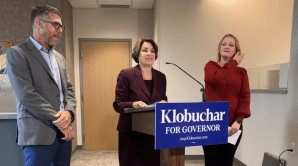
Those sudden fees and rent hikes were the subject of a housing bill recently struck down by the House in Minnesota’s last legislative session. Webster, who is part of a statewide group called ISAIAH, a nonprofit focused on racial and economic issues, later met with Sen. Amy Klobuchar at an April roundtable to discuss the problem.
While Webster found the roundtable encouraging, issues of affordability extend well beyond housing costs. Gas prices have skyrocketed, along with groceries, licensed childcare, and utilities. Webster used to pay $80 or $90 to fill up her truck, but these days it’s more like $120.
“I can’t even prepay at the pump,” she said, citing an automatic feature that prevents cards from being charged more than $100 upfront.
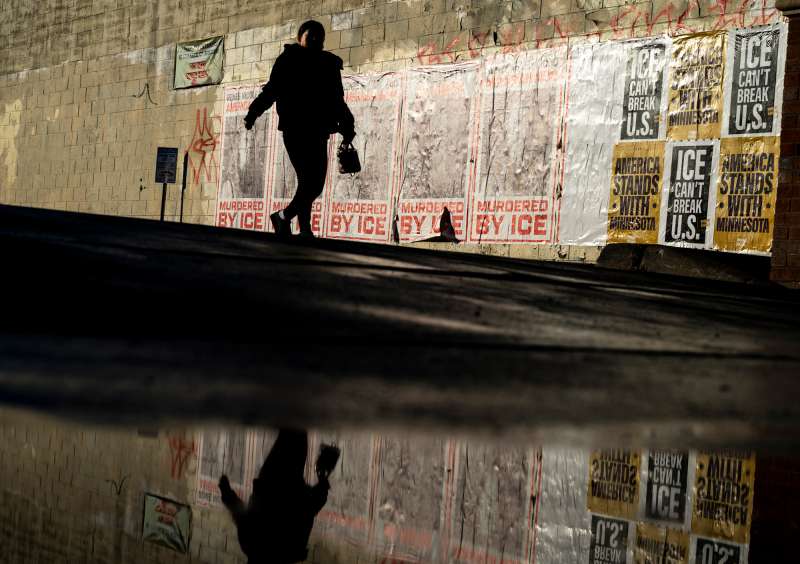
In short, Minnesotans like Webster are feeling the financial squeeze from all sides. Their communities also continue to reel from the aftermath of highly publicized ICE raids that plagued their cities for weeks beginning in December 2025.
“Our state has always been at the top of quality of living lists for parks, schooling, affordability, recreation—we’re just always near the top if you compare us against all the other states,” Webster said. “And now? Why would you want to come visit here if you might get arrested because of the color of your skin?”
In a district in the southeast corner of the state where the city meets rural swaths of farmland, there’s a quite even split between conservative and liberal voters. Many view this corner of the North Star State as a north star for the nation, a microcosm of what the average American is thinking and feeling heading into the midterms.
Muneeb Ahmed is the director of the Muslim American Society Lakeville Masjid and a leader with ISAIAH, a nonpartisan nonprofit focused on engaging underrepresented communities in civic life. He sees the district that way too.
“What makes this district really interesting is that it reflects a multitude of perspectives across Minnesota and the country,” Ahmed said. “It includes rural, urban, and suburban areas that experience different challenges but the same root causes: economic security, affordable housing, quality schools, healthcare access, and a responsive government.”
So when Minnesotans in the 2nd Congressional District head to the polls for the August primary, leaders in the state and across the nation will be paying attention to the results.
A bellwether election for Minnesota
When Congresswoman Angie Craig announced in August that she would not seek reelection to her 2nd District position in favor of a US Senate run, Republicans seized on a chance to claim her seat. However, the Cook Political Report still suggests the district will favor Democrats—it went for Joe Biden in 2020 and Kamala Harris in 2024 after Trump won the district in 2016.
Richard Carlbom is party chair for the Minnesota Democratic-Farmer-Labor Party, which endorsed Matt Little for the state’s 2nd district in May. He’s keeping a close eye on key issues in the district as midterms approach.
“There are two issues in Minnesota that are going to drive the narrative: the affordability crisis and this retribution campaign Donald Trump is waging on us that led to Alex Pretti and Renée Good being killed,” Carlbom said.
Momentum following protests in the state has not died down, Carlbom said, anticipating those issues will still be at the forefront of voters’ minds when they reach the polls.
“People are fired up. They saw firsthand ICE agents violating the law and violating our constitutional rights, and people are not going to forget that,” he said.
In addition, the seat has been Democratically held for several years.
“We won this seat back in 2018 and we have continued to see it turn a little bit more blue each and every cycle,” Carlbom said. “We have a great candidate in Matt Little, who is a former state senator, former mayor of one of the harder, more challenging areas, the district for Democrats, and so we feel really good about our candidate.”
Webster, the mobile home owner, is a moderator for the Burnsville, MN Community Page, a Facebook community of more than 12,600 members living in Stark and Dakota counties in the 2nd District. Members typically post about upcoming farmers markets, lost dogs, and police activity in their neighborhoods or ask for advice about where to find affordable car insurance or a decent dentist. Webster keeps a close eye on heated political conversations and shuts things down if they escalate to name-calling.
Her understanding of key issues in her area has primarily come from canvassing neighborhoods with ISAIAH.
“My city in particular, we’ve had a Republican mayor for as long as I can remember, so we are kind of a red city but we can see downtown from our city–we’re very close to actual Minneapolis,” she said. “So I do see a lot of Republican support and the anti-immigrant sentiment on the page, and I saw more of that the further out we got when we were going door to door.”
Key issues at the forefront for the district
For the average American, the cost of eggs and electricity hits closer to home than many of the broader, more existential problems politicians often focus on. That’s why policies aimed at lowering food prices and helping parents afford childcare remain at the forefront.
“Republicans in Washington and in Minnesota promised to fix the affordability crisis on day one, and they just made it worse,” Carlbom said. “And people in the 2nd District are feeling it at the pump, they’re feeling it at the grocery store—the farmers in that district are paying $5.50 a gallon for diesel. The fertilizer has been hard to get because of the Iran ‘war of choice’ and tariffs. So I actually feel good about the fact that we are in a position to retain that seat.”
Democrats have backed proposals targeting grocery price-gouging, late fees for utilities, and expanded childcare tax credits, arguing that corporate costs and rising prices are squeezing middle-class families. Republicans have focused more heavily on permanent tax cuts, including $1 billion in property tax cuts, saying Minnesotans need broader relief from government costs and inflation.
Candace Yates, Executive Director of Child Care Aware® of Minnesota, a group aimed at improving the state’s early education and care system, called childcare an economic driver for the state.
“Childcare directly supports the workforce, which supports our state’s economy and our country’s economy, so we need a thriving childcare industry if we are going to continue to grow and support our nation and the future,” she said.
Yates said that as the overall cost of living increases for Minnesotans, affording childcare becomes that much harder, and she believes it’s a concern that will be highlighted through the midterms and into next year’s state legislative session.
Carlbom agrees.
“We talk about the cares: healthcare, senior care, childcare—those are the areas of costs that are deeply concerning to these different pockets of folks,” Carlbom said. “Young families are getting crushed by childcare costs, and we need more help, and it’s being exacerbated because grocery budgets are getting tighter and gas is more expensive. So, it just makes childcare even more challenging.”
In the meantime, as Webster pointed out, housing shortages plague the state where low-income renters struggle to find apartments they can afford, often spending more than 30% of their income on housing.
In more suburban parts of the district, debates over abortion access and even book bans at public schools have energized voters and fueled organizing efforts on both sides, though Webster notes those issues seem like small potatoes compared to affordability concerns. Especially in rural areas of the state, including Le Sueur County, farmers are struggling to afford fertilizer and fuel amid the war in the Middle East.
Even within the Democratic Party, priorities for the 2nd District differ.
Rachel Bryant is a co-lead of a grassroots organization known as Indivisible for the Shakopee, Prior Lake, and Savage areas of the district. Indivisible is a nationwide network of groups resisting what it calls a “right-wing takeover of government.” Affordability remains a key issue in the state, she said, where “gas prices are insane right now,” and at the same time, the group doesn’t feel moderate Democrats are doing enough to oppose fascism.
“Although we have been represented by a Democrat, Angie Craig, for several sessions now, we have often felt her moderate positions do not represent the progressive voice we want in Washington,” Bryant said. “We are living in unprecedented times and need a congressperson that will not settle for the status quo.”
The group is mostly interested in keeping the district blue, regardless of which Democratic candidate wins the primary. And the key, they believe, is avoiding an intraparty fight, which they worry could hand Republicans a win in the district in November.