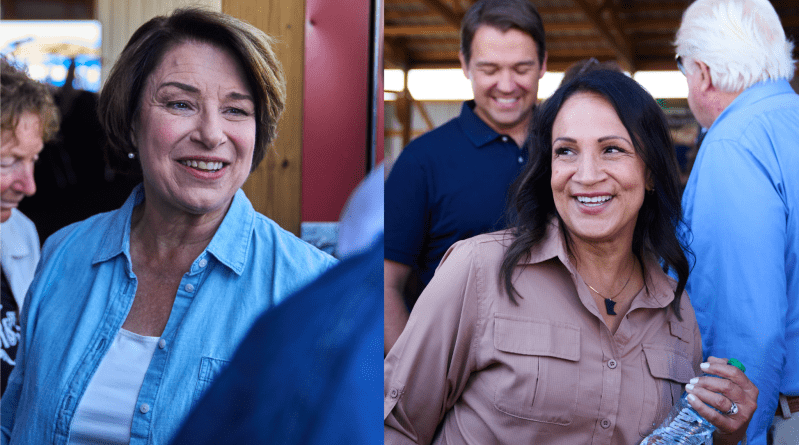
The race for Minnesota governor has been whittled down to two candidates: the favored DFL Sen. Amy Klobuchar, and the GOP-elected state Rep. Lisa Demuth. Demuth was a shock winner with a little over 43% of the vote when the polls heading into the primary suggested a different result was coming. Klobuchar won her race with almost 90% of the Democratic vote, a clear favorite.
Current DFL Gov. Tim Walz has held the seat since 2019, and the state hasn’t elected a Republican governor since Tim Pawlenty won a second term in 2006. No matter which party wins the race, Minnesota will have its very first female governor in its history.
So far, Klobuchar has the advantage in early polling. A KSTP/Survey USA poll puts Klobuchar at 52% of the vote and Demuth with 36%, leaving 12% of voters undecided, and 1% for Green Party candidate Steven Young.
Both candidates have pretty different ideas when it comes to leading the North Star state, only sharing a vision of preventing fraud, though even their approaches are different. Here’s everything you need to know.
Fraud
If there’s one main topic in this race, it’s fraud. It’s been a major news item in Minnesota these past few years, from the COVID-19 $250 million Feeding Our Future fraud scheme, to $1.5 million in Medicaid fraud. The Trump administration has hounded these investigations, leading to derogatory remarks from Trump about Minnesota Somalis and threats to end their Temporary Protected Statutes (TPS) protections, and unlawfully pause Medicaid payments to the state.
Klobuchar’s extensive fraud plan was her first public policy proposal for her campaign. She wants to modernize “decades old IT systems” and launch an innovation initiative to improve technology around government systems. For small businesses and employees seeking state resources, Klobuchar wants to streamline application processes and require strict deadlines for permitting processes and refunds for those not met by the state.
As for prevention and prosecution, Klobuchar wants more front-end screening for grants and contracts, increased oversight, audits for state agencies, and a tougher criminal fraud statute.
Demuth just recently released her fraud plan, which skimps on the details. Her first objective is to clean house of any existing commissioners and deputy commissioners. Demuth also wants to ban remittance for Minnesotans on welfare who have committed state fraud, move services to a state-central run entity instead of relying on county-run efforts, and hire forensic accountants to investigate whistleblower reports.
As leader of the House this year and co-leader the year before, Demuth touts passing the Office of Inspector General bill–which oversees public dollars and alleged fraud–as a win.
Affordability
Klobuchar’s campaign has two main affordability plans: one for housing and one for healthcare.
For housing, Klobuchar wants to help the state build about 100,000 more homes, allow cities to refurbish state land for profit-making opportunities, and make the state housing tax credit permanent. She specifically wants to build more houses in rural communities, as they lack sufficient housing for employees. Klobuchar also wants to implement many ideas in the Manufactured Home Bill of Rights that failed the legislature this year, protect renters from predatory pricing, and streamline rental aid.
For healthcare, Klobuchar wants to lower the sky-high health insurance premiums for both private plans and the state-sponsored MNsure with a state tax credit. Additionally, the subsidy would create a per-employee tax credit for small employers who fund their workers’ coverage. These changes, she argues, will be needed if the federal government continues to fail to extend the American Care Act (ACA) subsidies that Republicans allowed to expire last year.
Klobuchar wants to expand state bulk purchasing power for prescription drugs as well, utilizing the Minnesota Multistate Contracting Alliance for Pharmacy (MMCAP), the nation’s largest multistate public purchasing pool.
Demuth hasn’t offered many details on how she’d address affordability, instead answering most political questions with the answer that fraud must be prevented in the state. On her campaign website, she lists cutting taxes as her main concern surrounding affordability. Demuth says she wants to reduce the two lowest tax brackets, lower car tab fees, and end taxes on Social Security benefits for seniors. In this year’s legislative session, Demuth and Republicans already cut car tab fees for one year only, from 1.57% to 1.28%.
In her time voting in the state legislature, Demuth has also opposed many healthcare affordability plans, like paid family and medical leave. She voted against the bill, which passed in 2023 and went into effect this year, and has advocated for reversing it. Paid family and medical leave provides individuals with payment and job protection for up to 20 weeks when they need to tend to a health condition or take care of a family member.
Workforce
Klobuchar also has a pretty detailed plan when it comes to boosting the state’s workforce should she be elected governor. Most of it has to do with preparing Minnesota’s youth for entering the workforce. This means improving reading and math skills with evidence-based curriculum, advancing STEM education with expanded education opportunities, and starting work-based learning earlier.
Additionally, Klobuchar wants to increase registered apprenticeship and skills workshops, launch a public-private fund for skilled workers and trades (like healthcare, education, and public safety), and create partnerships between local employers and schools.
While Demuth focuses on education as well, she says Minnesota schools “need a dramatic reset.” Her main concerns on education reform are keeping “woke gender and racial ideology” out of the classroom, referring to studies on LGBTQ+ people, critical race theory, and DEI.